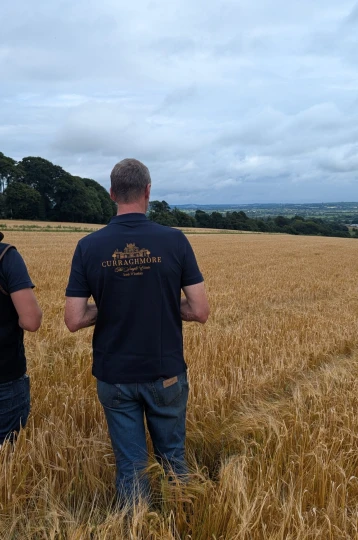


When malting barley is harvested, the moisture content in each grain will be around 15%, sometimes higher, depending on the conditions. The priority then is to dry the barley, to get the moisture level in the grain down to below 14%.
Why is this important?
Well, if you store barley with higher moisture content, you run the risk of barley deterioration. This will negatively impact the yield and quality at distillation. Moisture in the grain gradually reduces the ability of the seed to germinate in the next stage of the process, malting (see our blog post on malting here). Active respiration of the grain during storage will deplete the nutrition reserves that the seed uses to germinate or sprout. Moulds and diseases can also develop in high moisture conditions. If the grain continues to ‘respire’ or act alive, it will begin to sprout. This will result in quality reduction and even crop loss – you simply won’t be able to use the barley in distilling. The idea is to halt this process until such a time as we are ready to malt it. Drying the barley halts this process.

Drying barley is carried out in machines similar to a giant tumble dryer, and close readings are taken frequently to ensure the correct moisture level is achieved. Overdrying the barley is also to be avoided – it can be wasteful and lead to reduced returns.
So it’s a fine balancing act, keeping an eye on moisture levels to ensure they are at the right level. Even in storage, instruments are used to constantly monitor the moisture level in the grain, to ensure it’s kept consistently at the sweet spot – below 14%.